
.png)
.svg)


.svg)
.svg)

Gaming is the third most popular media activity worldwide. In South Africa, it is mobile-first, demographically broad, and still widely ignored by local brands. This piece breaks down who the South African gamer actually is and what that means for marketers.
There are more gamers in South Africa than there are people in Gauteng and the Western Cape combined.
Roughly 26.5 million South Africans play games (about 42% of the population). And if you're still picturing a teenager in a dark room with a console, it's time for an update.
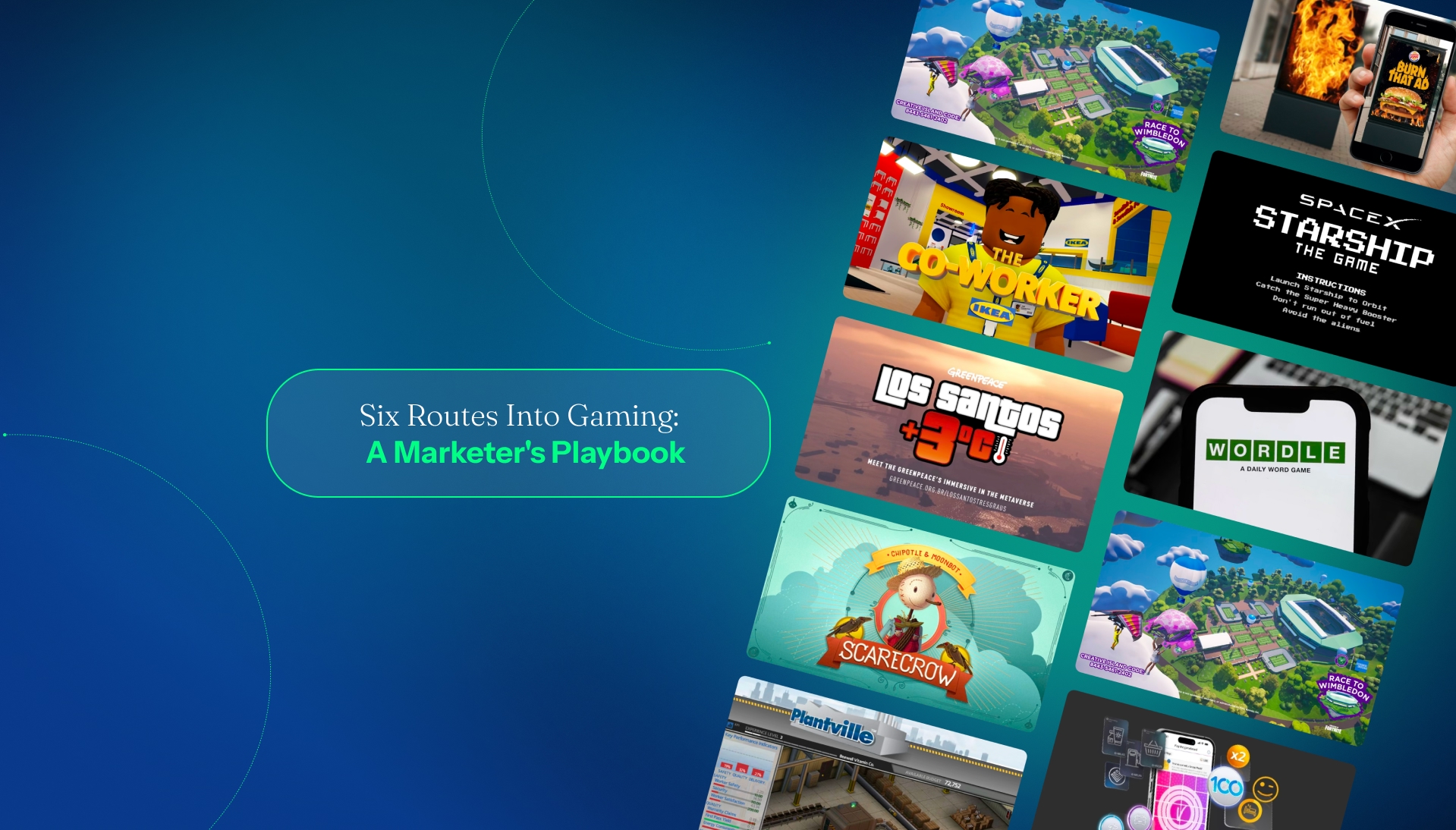
From the 34-year-old mom playing Candy Crush on her lunch break, the daily Wordle player sitting in the boardroom, to the young adult learning new financial skills through educational games, the ‘gamer’ title spans the full gambit. For marketers, that makes games a mainstream media channel hiding in plain sight.
Gaming has quietly become the biggest entertainment medium on Earth
Globally, there are 3.58 billion gamers. Gaming now generates more than three times the combined revenue of the film and music industries put together. It's the third most popular media activity worldwide, and for younger audiences, it's often ranked first, ahead of TV and social media.
Why? Because games ask for something no other medium does: your active participation. You're not scrolling past an ad. You're not half-watching the TV while you check your phone. You're fully-immersed, inside the experience. That shift, from advertising as interruption to invitation, is exactly why attention in games tends to run deeper than attention almost anywhere else.
South Africa: Africa's biggest, most mobile-first gaming market
South Africa is the continent's largest gaming market by revenue, and it's growing.
The defining local feature of the market is mobile. With smartphone penetration above 81%, there are an estimated 22–23 million mobile gamers in the country, dwarfing the roughly 4.9 million PC players and 2 million console players (who are concentrated almost entirely in Gauteng and the Western Cape).
The local ecosystem also spans a mature esports scene with an estimated 1.5 million active competitive players, backed by brands like Telkom, Red Bull SA and Monster Energy.
Who is the South African gamer, really?
Here are the facts:
- The gender split for people who play games is close to even. 52% male, 48% female across digital gaming. In casual mobile titles, women are actually the majority.
- Gamers are better educated.
- They are more affluent.
- They are young, but not exclusively. More than half of digital gamers are aged 15–34, six points above the national average, confirming gaming as a true youth-reach channel.
- They're online, connected, and looking to buy. Indexed against the general population, gamers over-index on nearly every digital behaviour that matters to a marketer, including researching products and brands.
The opportunity in front of South African brands
Gaming is still widely under-utilised as a media channel by local brands.
The question worth asking isn't whether your audience is in games; statistically, they almost certainly already are. The real question is what role gaming should play in your media mix, and how to show up effectively once you're there.
Our full report, The State of Gaming in South Africa: 2026, is built to answer exactly that. Drawing on the most recent MAPS data and Eighty20 ENS analysis, along with contributions from leading industry voices, it goes deeper into who South African gamers are: why they play, where they live, and what motivates them, alongside a practical playbook for marketers, real local case studies, and cost benchmarks for getting started.
Download your free copy of the report below


.gif)
