
.png)
.svg)


.svg)
.svg)

Gaming is on more marketing radars than ever, but knowing it matters and knowing what to do about it are two very different things. This guide is for the marketers who are ready to move past the conversation and into a strategy.
You're convinced that there’s something interesting happening in the gaming space. Good. You’re right. Now what?
This is usually where things stall. Games can feel like a channel without a map, one platform for advertising, another for community, a completely different one for building something of your own. And this can be overwhelming.
The scale, attention, and cultural currency of gaming has seen it become one of the fastest-growing channels for brand building and advertising, and marketers around the world are increasingly finding new ways to show up in it.
‘Gaming’ however isn't just one channel with one format. It's an ecosystem with a few clear ways in. To determine how best you can effectively activate in the gaming space or invest in games as part of your marketing mix, it’s critical to start with answering these three key questions:
- What's your objective?
- Who's your audience?
- How much are you willing to build versus buy?
Here are three options to think about and some local case studies to consider:
1. Advertise: buy your way into existing games and communities
This is the lowest-barrier, fastest-to-market option to consider. You're not building anything significant of your own, rather, you're getting the attention of the gaming audience by placing your brand within existing communities and worlds, through dynamic in-game advertising (billboards, rewarded video, interstitials, audio) or through influencer and community partnerships (streamers, esports teams, event sponsorships).
Game-based advertising behaves like any other programmatic media buy, and the numbers back that up locally: in-game advertising CPMs currently sit around R90–R110, against roughly R270 for linear TV. Rewarded video is the standout local format, preferred by 68% of players in South Africa, likely because it respects the golden rule of this whole channel: players don't resent brands in games, they resent being interrupted for nothing in return.
MTN's SHIFT activation is a good local example of the community and sponsorship side of this route. Run across eight shopping centres nationally in partnership with Hyprop and the African Cyber Gaming League, it combined esports, casual play and family entertainment into mall-based events, drawing around 40,000 visitors and over 7,000 competitive matches. The objective wasn't a hard sell. It was positioning MTN as more than a connectivity provider, by proving that connectivity enables gaming, entertainment and community.
2. Integrate and Gamify: add play to what you already have
This route into the gaming space involves developing and adding game elements and game mechanics (think streaks, quests, tiers and leaderboards) into an existing app, loyalty programme or customer journey of yours. You're not renting someone else's audience, you're making your own more engaged. This route is highly measurable and very scalable.
Gamified elements have become commonplace across many loyalty programmes and activations from local brands: from Woolworths’ Play & Win to Vodacom’s V-Up game on the VodaPay app.
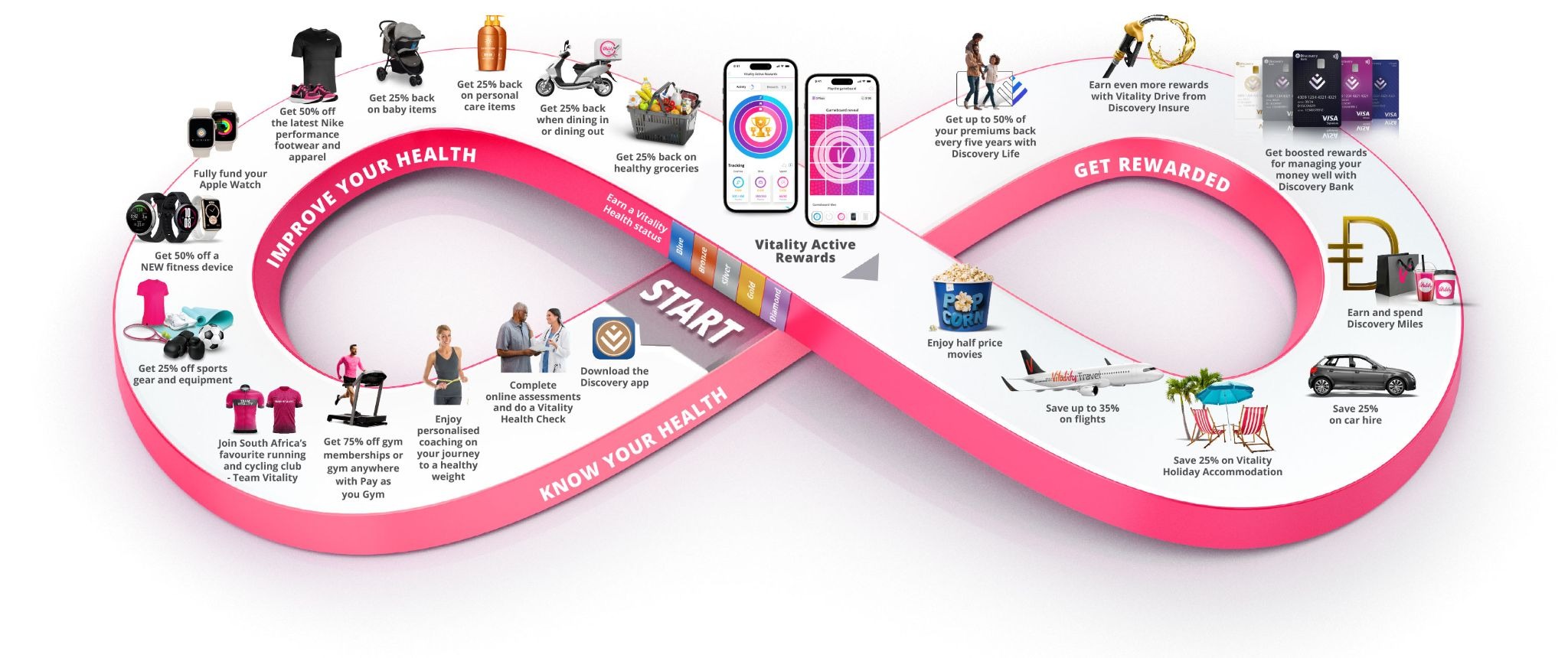
Of course, no conversation about gamified loyalty in South Africa is complete without bringing up Discovery Vitality, arguably the category-defining case study. By turning healthy behaviour into a rewards loop, Vitality has grown to 1.9 million active members in South Africa, who log 46% more active days per month and show a 13% reduction in death rates among participating members.
While Vitality is redefining behavioural economics in healthcare, Pick n Pay’s Smart Hopper is another local example that demonstrates how gamified loyalty can drive fast-moving retail metrics directly inside an e-commerce ecosystem. Integrated directly into the Pick n Pay ASAP! on-demand delivery app, Smart Hopper is a native, playable moment built directly into the digital path to purchase which has driven a 22% spend uplift and 1.5 million-plus vouchers claimed.
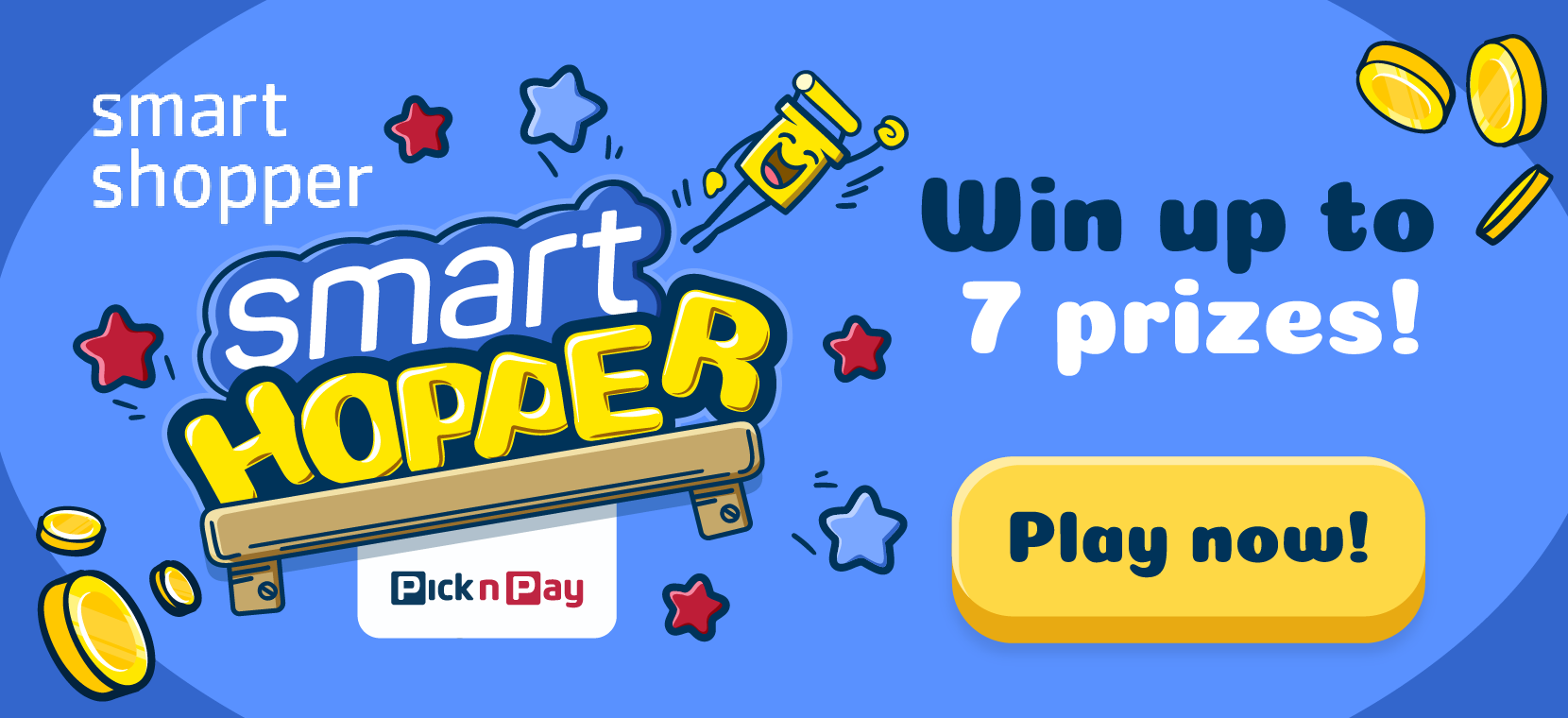
For both of these examples, what stands out is that delivering entertainment through games and play isn't a distraction from the commercial goal, it's the mechanism that delivers it.
3. Own: build your own game or persistent world
This is often the highest-investment, highest-payoff route into the world of games. You're not borrowing an audience or a platform, you're building the destination itself, which means full creative control, first-party data, and zero dependency on someone else's rules or lifespan.
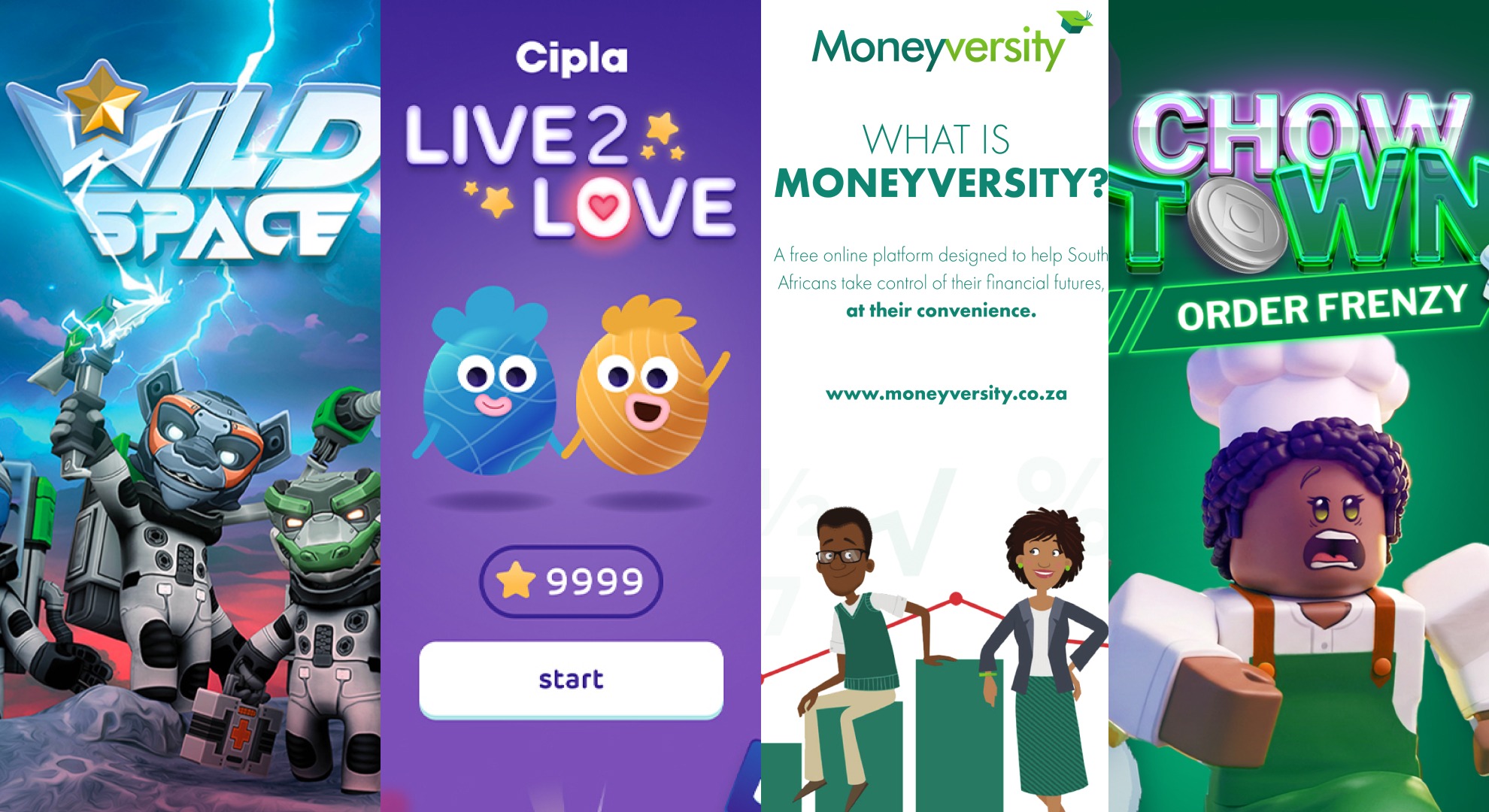
Several local brands and organisations have invested in game-based solutions to drive different business objectives. Old Mutual created Moneyversity, a platform combining entertainment with practical financial education to drive financial literacy. RCL Foods invested in Wild Space, a gamified virtual shopping platform built to transform customer engagement. Cipla commissioned Live2Love, a game that follows two characters, Blue and Sunny, to advocate for and reinforce positive habits around HIV testing and consistent medicating.
Another success story is Nedbank's investment into Chow Town, inside Roblox. Chow Town is Nedbank’s unique, owned world on the hugely popular global platform through which they can engage an otherwise unreachable youth audience. Chow Town is a world where users run their own virtual restaurant while absorbing financial literacy lessons, wrapped in authentic South African culture. The game has been played 1.7 million+ times, generating thousands of hours of engagement for the brand and has also translated into a measurable uptake in Nedbank’s youth bank accounts.
Once you've picked a route, three decisions shape delivery
1. Timeline: burst or always-on? A burst is a short, sharp campaign built around a specific moment (a launch, a season, a sponsorship). Always-on is a standing brand channel players return to over time. Bursts are easier to resource and deliver fast, visible impact. Always-on compounds: it builds real brand familiarity, richer first-party data, and a community you actually own.
2. Go-to-market: game activations need to be treated like a product launch. The most common failure in gaming isn't a bad build, it's a good one nobody knew about. Use native in-platform discovery, coordinate social, PR, retail and CRM as one launch system rather than separate silos, and lean on creators who already have your audience's trust.
3. Measurement: match the metric to the funnel stage. Awareness-stage placements should be judged on reach, impressions and brand lift. Mid-funnel, consideration-driving formats should be judged on engagement rate and dwell time. Action-stage mechanics should be judged on conversions, downloads and sales uplift. Decide what you're proving before you decide how you'll prove it.
Tips for your briefs
Every strong gaming activation starts with a clear brief, not a platform choice. Before you write one, get honest answers to questions like:
- How many players do we want to see?
- How many times should the average player return?
- What behaviour are we actually trying to change?
- What are we offering that makes it worth coming back?
- Is this about driving revenue, or is this about the brand?
Get the objective right, and the mechanics, platform, and creative will all follow.
Want more details? Keen to know more?
This is a short version of The Gaming Playbook - enough to start the conversation, but not enough to build a strategy on.
Our most recent report, The State of Gaming in South Africa: 2026, unpacks all this and more: it breaks down the costs and timelines behind each route, unpacks more local case studies in depth, and gives you the detail you'll need to actually brief this in, not just talk about it.
If gaming is on your radar for 2026 or beyond, this is your starting point.


.gif)
