
.png)
.svg)


.svg)
.svg)

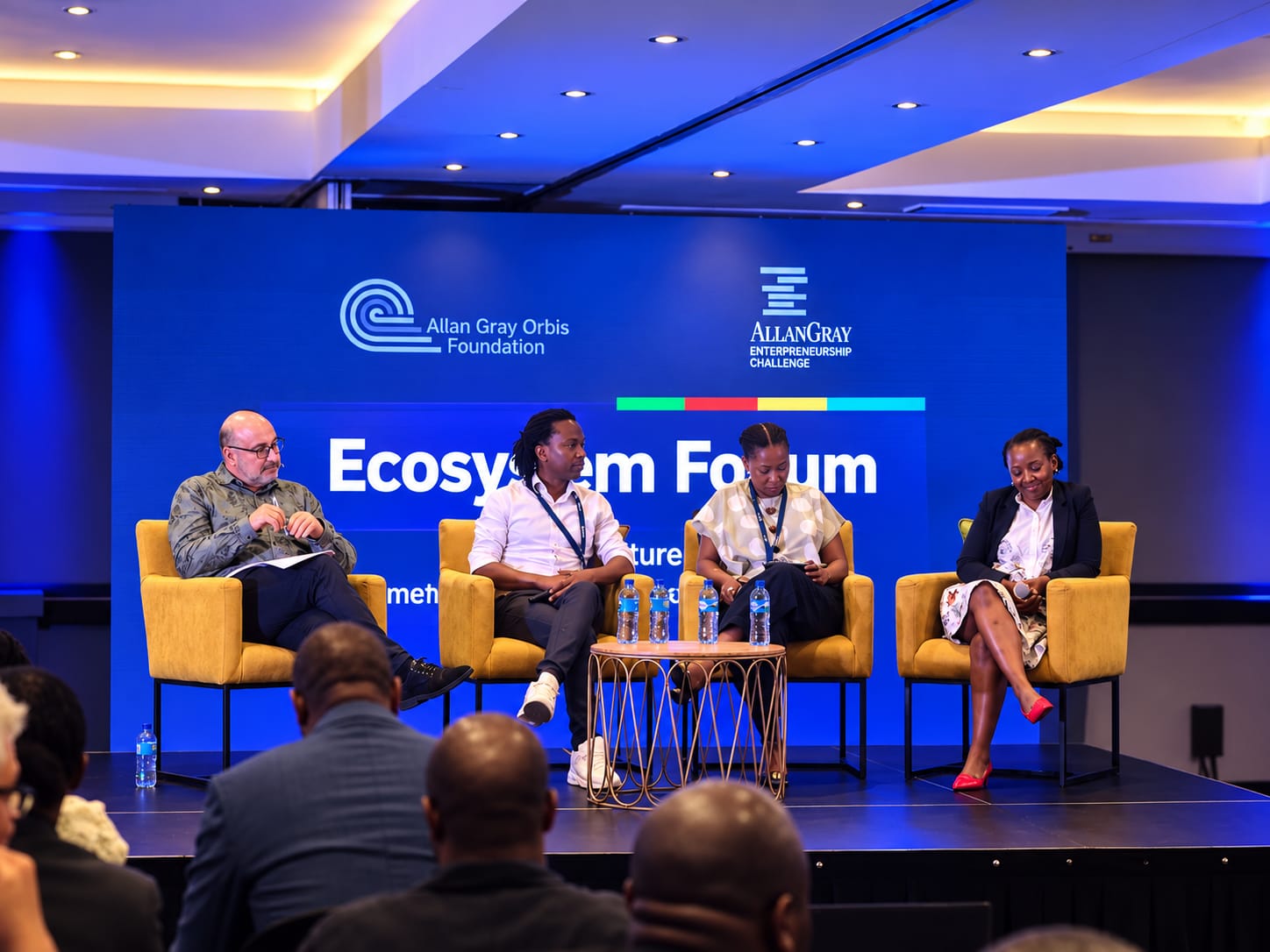
As the Allan Gray Entrepreneurship Challenge turns ten, we look back at Sea Monster's part in it. Since we joined in 2024, the high school game has reached 80,314 players, won two international awards and taken us from learners’ phones to stages in Germany and New York.
This October, the Allan Gray Entrepreneurship Challenge (AGEC) turned ten. The Allan Gray Orbis Foundation is calling it Level 10, and given we’re a games studio, we couldn’t think of a better name for it.
Sea Monster joined the journey in 2024, when the Foundation brought us in to evolve the high school game. Two phases, countless playtests and more check-ins than we can count later, we found ourselves in the room for the celebrations, with our CEO Glenn Gillis on the Ecosystem Forum panel asking what it will take to scale access to entrepreneurship education.
Built for the conditions of learners in Southern Africa
AGEC started in 2016 as a five-week online challenge built around weekly tasks and challenges. By 2024, the aspiration had grown, and so had the work of reaching as many learners as we could, wherever they are. So we started with the type of phone most learners actually carry.
The result became a 14MB browser game made for older Android phones and patchy data. Learners can sign up with just a cellphone number and pick up where they left off on any device. Inside, they build and run a business, buying stock, setting prices and hiring staff, while handling dilemmas straight out of Southern African life. Your mother brings her friends around and expects a discount. What do you do? That’s the point. As Charleen Duncan, Head of Public Affairs and Communications at the Allan Gray Orbis Foundation, told us at our lunch and learn last year:
“It’s possible to teach entrepreneurship, but you can’t teach entrepreneurship the way you teach maths or the way you teach history. It has to be lived.”
So, what's happened since?
Since the game launched in 2024, the Foundation has reported:
- 80,314 players
- 400,000 games started and 130,000 completed
- More than 87,000 hours of play, which adds up to almost ten years of continuous play
- Learners across South Africa, Botswana, Eswatini and Namibia, and around 1,350 teachers trained across South Africa’s nine provinces
Average play time has been held at 55 minutes per player every season, even as the game grew 50% longer and reached a much broader audience.
In 2025, the game also won Gold at the GEE! Learning Game Awards (Informal Learning) and Silver at the International Serious Play Awards (K-12 Education).
The stat we love most is learners coming back. Some built spreadsheets, worked out the game’s mechanics and shared strategies so their whole school could climb the leaderboard. In game design, there’s no better signal, and it’s a story we’ve been proud to take far beyond Southern Africa.
Taking AGEC to the world stage
This year, Glenn shared the AGEC story at two of the biggest gatherings in learning games: the Serious Play Conference in Germany and the Games for Change Festival in New York.
At Serious Play in June, he spoke about entrepreneurship as agency. In much of Africa, most young people don’t start businesses because they want to be the next Elon Musk, they start them because they couldn’t find a job. That reality has shaped every part of the game, which Glenn describes as closer to a small-business hustle simulator. The aspiration is agency, which is the confidence to build a future for yourself when the usual path isn’t there.
In July, he took the idea a step further at Games for Change. His talk, Reimagining Play When Access Is Not Guaranteed, looked at what access really means. When we talk about access, we usually mean devices, data and connectivity. Glenn argued that the deeper challenge is access to aspiration: the belief that you can act on the world and have a say in your own story. AGEC was built for older phones, shared devices and data bundles that have to last the month. Designing around those limits made it a better learning game for every learner who plays it.
In both rooms, the spreadsheet story got the biggest reaction. “You could call that cheating,” Glenn told the Serious Play audience. “I call it entrepreneurial thinking. The hustle is the point.”
The latest chapter
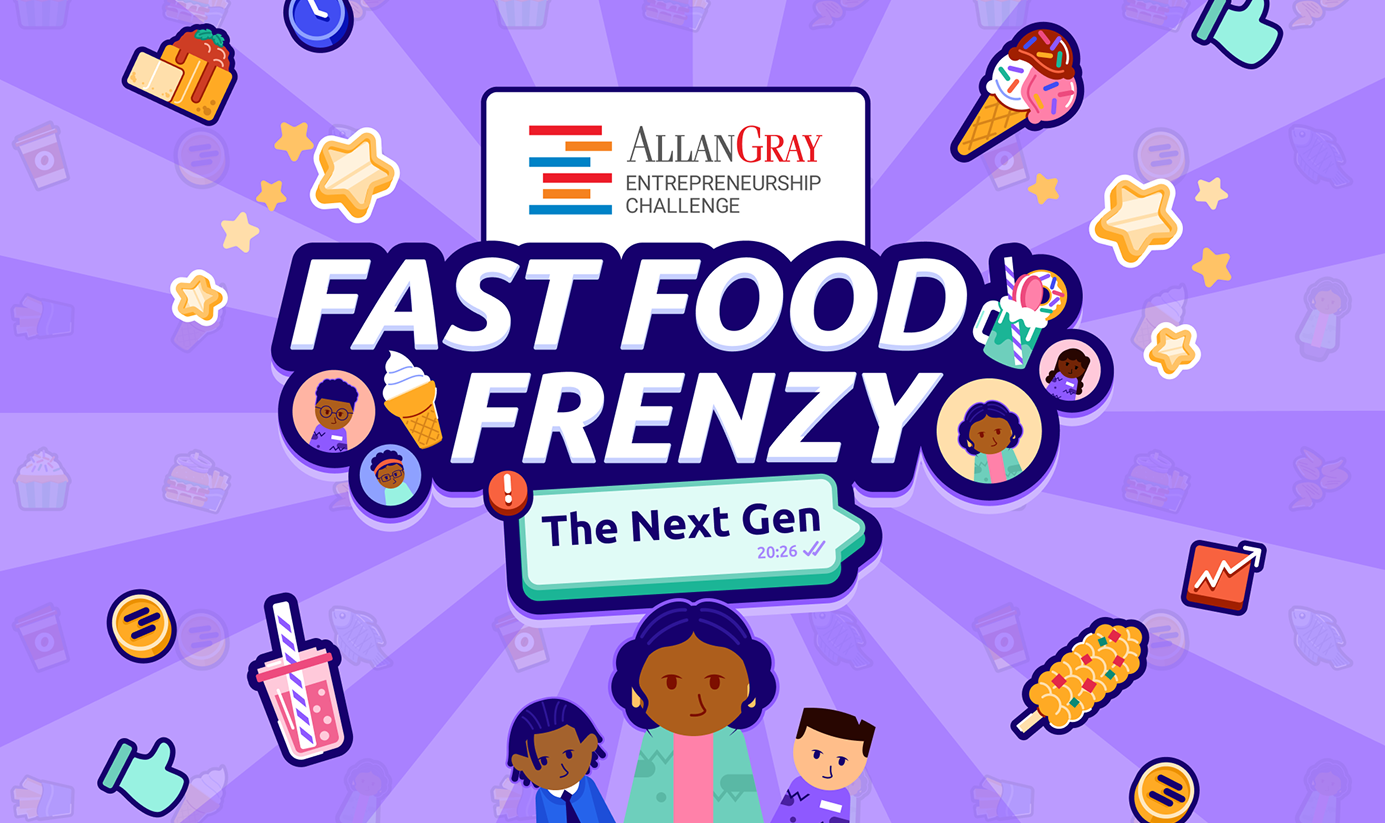
This year’s season brought our biggest update yet: Fast Food Frenzy: The Next Gen. Players now choose a product strategy (mass appeal, ethical or premium), balance staff wellness against salaries and face tougher calls, like what to do with food that might not be completely safe to sell. The choices are both strategic and ethical; financial and human. And that is not a coincidence, this is rehearsal for what it’s like to actually run a business. We also made the hub simpler for teachers running school entrepreneurship clubs.
Looking ahead
AGEC was always designed as a pathway. Strong players move on to a business pitch challenge, then into clubs and the wider Allan Gray Orbis Foundation network. As Glenn puts it: “If you want real, lasting impact, don’t build a moment. Build a pathway.”
Thank you to the Allan Gray Orbis Foundation for the trust and partnership, to the teachers who make room for the game, and to every learner who came up short and came back to try again.
Ten years in, the story is still unfolding and we’ll be cheering on every learner who reaches the next level!


.gif)
