
.png)
.svg)


.svg)
.svg)

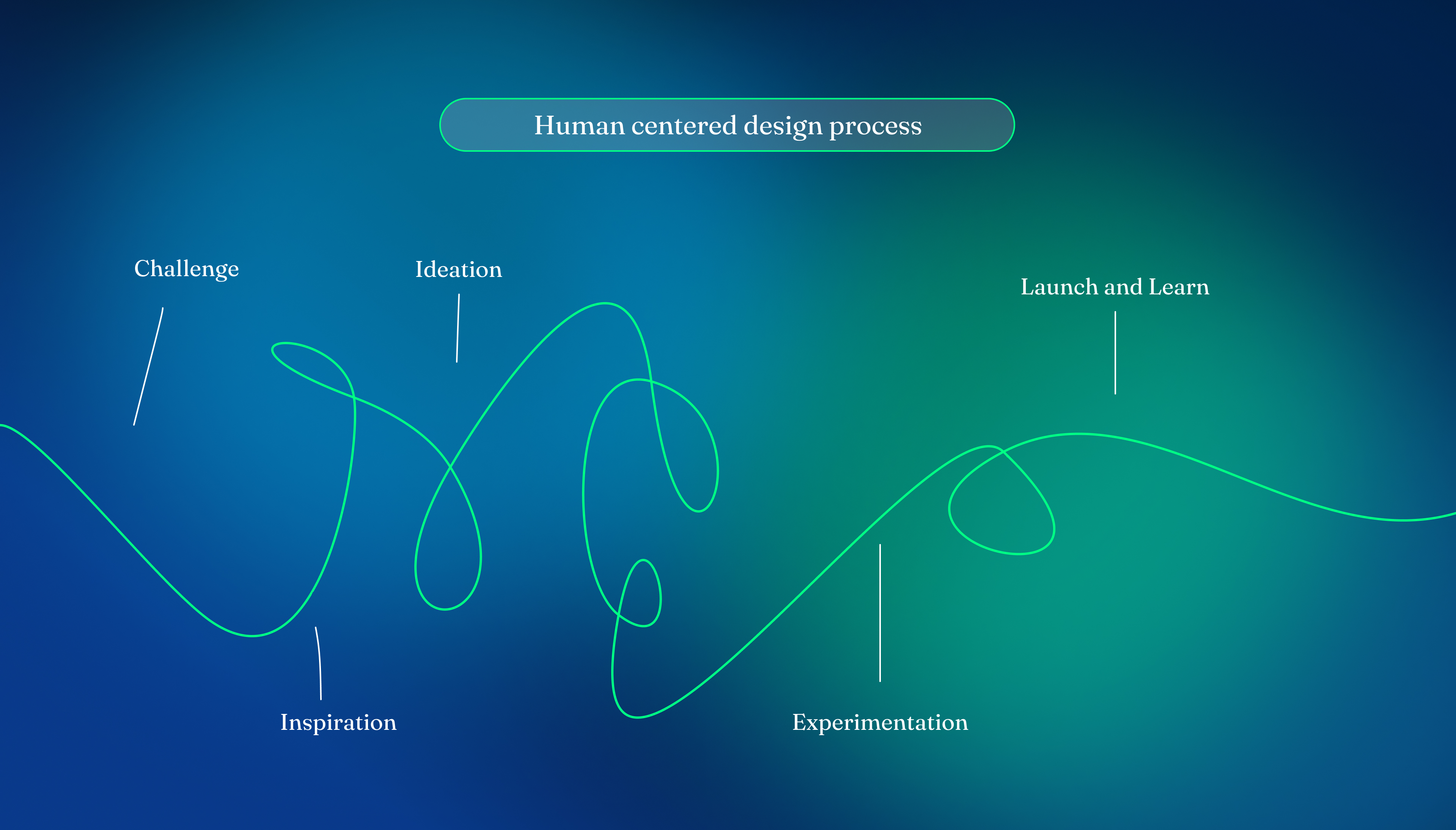
The digital world is flooded. Between scroll-and-skip culture and the explosion of AI-generated content, the challenge for brands isn't creating more, it's creating content that actually connects.
There’s this quote that we love that we often cite in talks and workshops:
“We have Paleolithic emotions, medieval institutions and godlike technology.” - E.O. Wilson
It’s always been relevant to us and the work that we do and it couldn’t be more apt for the moment we are living through right now: our tools are advancing at extraordinary speed, while our instincts, systems, and decision-making frameworks remain far less evolved.
That mismatch is not abstract. It shows up in the products we build, the incentives we reward, and the kinds of experiences people are asked to navigate every day. Whilst AI may have democratised content creation, it has not democratised judgment, taste, emotional intelligence, or strategic clarity. That distinction matters. Because the most difficult part of creative work was never simply making things. The difficult part is knowing what is worth making, why it matters, who it is for, what it should make people feel, and what responsibility comes with putting it into the world.
Our AI philosophy: enhance, don’t replace
We use AI as a creative amplifier, not as a substitute for imagination, strategic thinking, or craft. AI helps us move faster in the right places. It can expand exploration, accelerate prototyping, surface new directions, and reduce friction in production workflows. It can help teams test, iterate, and learn more quickly. Used well, it can create more space for higher-order thinking. But it does not replace the work of interpretation. And it does not carry responsibility in the way a human team must.
That is why our model is human-in-the-loop by design. Our thinkers. writers, designers, developers, and learning specialists define the brief, direct the process, interrogate the output, and refine the final result. AI may help us generate possibilities. Humans remain accountable for meaning.
Human-centred design is not the soft layer. It is the control system.
When people talk about human-centred design, they sometimes treat it as the gentle part of digital work: the empathy layer added after the real technology decisions have been made. We see it differently. In the age of AI, human-centred design is the discipline that prevents capability from outrunning consequence. It is what keeps product decisions tied to actual human needs rather than technical novelty. It is what asks not only “Can this be automated?” but also “Should it be?”, “For whom?”, and “What might be lost if it is?”
That shows up in practical ways.
Principle 01: People first
We design for humans, not for output volume. AI can help build the machine, but it cannot define the emotional truth of the experience. We still believe that story, agency, delight, and relevance are what make digital work matter.
Principle 02: Human accountability
No important deliverable should emerge unexamined from a model. Human review is not an inefficiency in the system; it is the mechanism by which quality, context, and responsibility are preserved.
Principle 03: Data privacy
We use paid, enterprise-grade AI tools and protect client information carefully. Sensitive data does not belong inside casual consumer workflows. Trust is not a feature add-on; it is foundational.
Principle 04: IP protection
All final production assets are materially reviewed and refined by our team. We do not use AI in ways that create confusion about ownership, originality, or commercial rights.
Principle 05: Ethical innovation
We apply oversight proportionate to risk. No unreviewed output ships as final. No meaningful decision is handed over without human judgment. And no system should be considered successful if it is efficient but alienating.
Why this matters for brands and businesses
For leaders in marketing, learning and development, innovation, and digital experience, the goal is rarely “more AI.” The goal is usually clearer than that: more impact, more engagement, more trust, more relevance, more measurable value. And that’s why a human-centred approach really matters.
For enterprise brands exploring the application of games and gamification, especially in sectors like financial services, healthcare, or education, AI can unlock better simulations, more adaptive journeys, and more responsive learning experiences. But the real value comes when those experiences are designed to respect people’s intelligence, context, and emotional reality, rather than simply pushing more information at them.
For youth-focused brands in retail, FMCG, or entertainment, the stakes are different but equally high. Younger audiences are highly fluent in digital language. They can sense instantly when an experience feels generic, extractive, or cynically automated. Authenticity is therefore not a ‘nice-to-have’, it’s a design constraint.
Our lens therefore remains the same whether we are building a financial education journey, an interactive campaign, a Roblox activation, or a branded game: technology should deepen connection, not flatten it.
Beyond the AI script
There is a version of the current AI conversation that has become repetitive. One script says everything is about to be taken away. Another says everything is about to be transcendent. Another says the real prize is simply producing more content at lower cost. Yet another insists nothing fundamental is changing at all…
For us, the more useful question is not whether AI will replace creativity, strategy, or human connection. It is how these things are being reconfigured already, and what kind of future we are choosing to build through that reconfiguration.
History suggests that important technologies do not simply substitute for old tools. They change the shape of the work around them. They alter what becomes valuable. They create new possibilities while exposing new risks. AI will do the same.
As we see it, the opportunity is not to automate our way into sameness. It is to use these tools to create richer forms of participation, learning, play, and meaning, while staying intensely conscious of the humans those experiences are meant to serve.
The brands that will matter won’t be the ones that use AI the most. They will be the ones that use it with the most care. They will understand that efficiency without empathy is just acceleration; that intelligence without judgment is unstable, and that scale without meaning is just noise. And they will recognise that in a moment defined by EO Wilson’s imbalance — ancient emotions, outdated institutions, and astonishing technology — the job is not to become less human in order to keep up. It is to design more deliberately around what being human actually requires.
That has been our philosophy at Sea Monster for the last 14 years. And if anything, the age of AI makes that even more important, not less.


.gif)
